XORICON TestQA
Application lifecycle management with tests, requirements, and versions.
TestQA connects reusable test cases, requirements, releases, issues, branches, and baselines in a structured ALM tool for traceable quality management.
XORICON TestQA
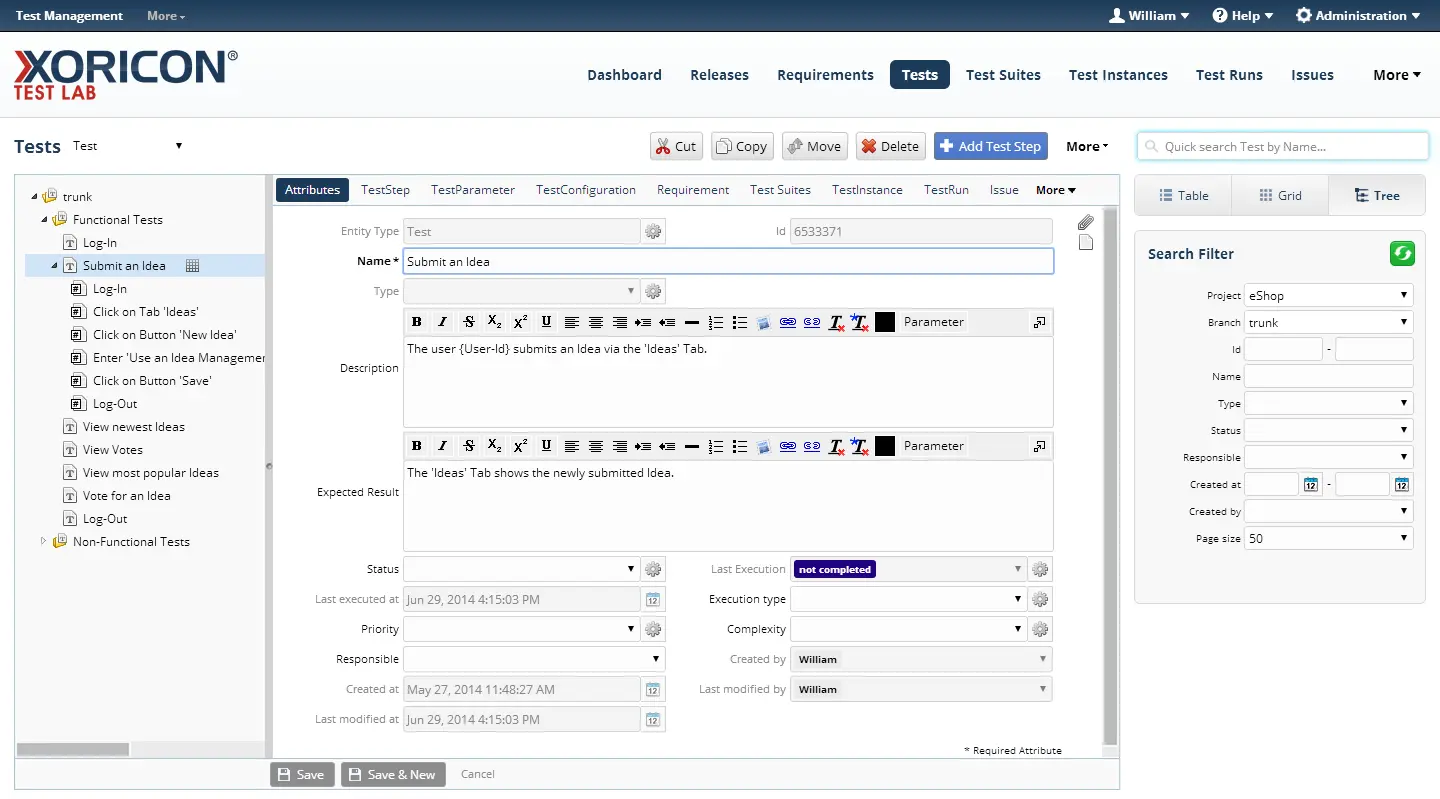
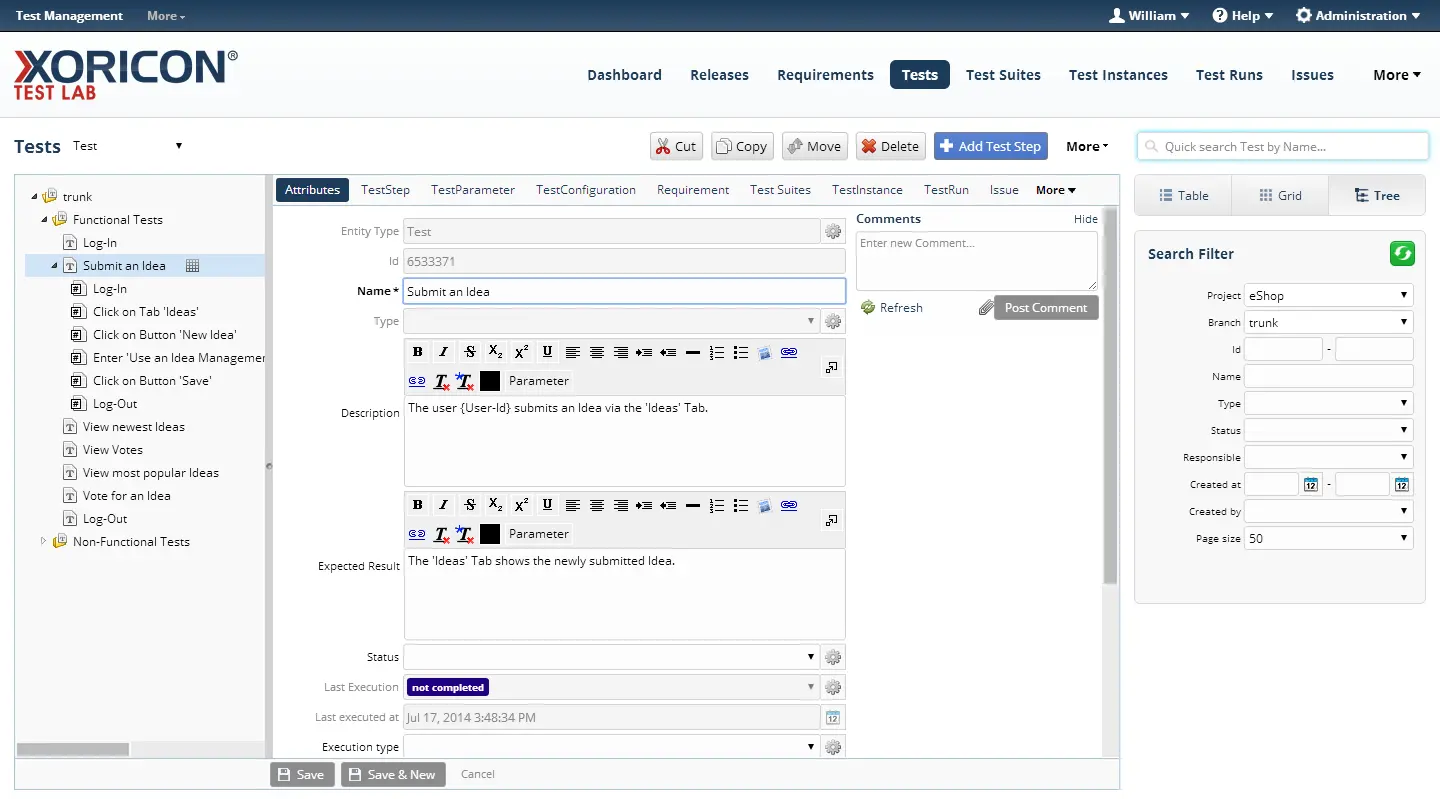
Product interface — XORICON TestQA
QA and test management teams
Product teams with release and variant management
Organizations with traceable quality processes
What the product covers
The core functional areas in a compact overview.
Reuse test cases
Test cases can be structured hierarchically and described with test steps, inputs, expected results, parameters, and configurations. They can be added directly or through linked requirements to test suites and reused across releases or product variants.
Use branches and baselines
Versioned work states support parallel product lines, release branches, and defined approval states. Baselines make later comparisons and audits possible.
Trace quality
Requirements, test cases, test runs, defects, and releases can be linked to show coverage, risk, and release impact.
Report QA status
Dashboards, graphs, and reports summarize test progress, coverage, open defects, and release readiness.
Use flexible views and filters
Data can be displayed in tables, lists, trees, tree tables, and editable grid views. Custom filter queries support complex restrictions, sorting, and column selections.
Control workflows and permissions
State transitions, condition rules, email notifications, and automatic field updates can be combined with a fine-grained permission model.
In detail
Functional and technical aspects that matter in practical use.
Application views
Selected views from the existing product interface.
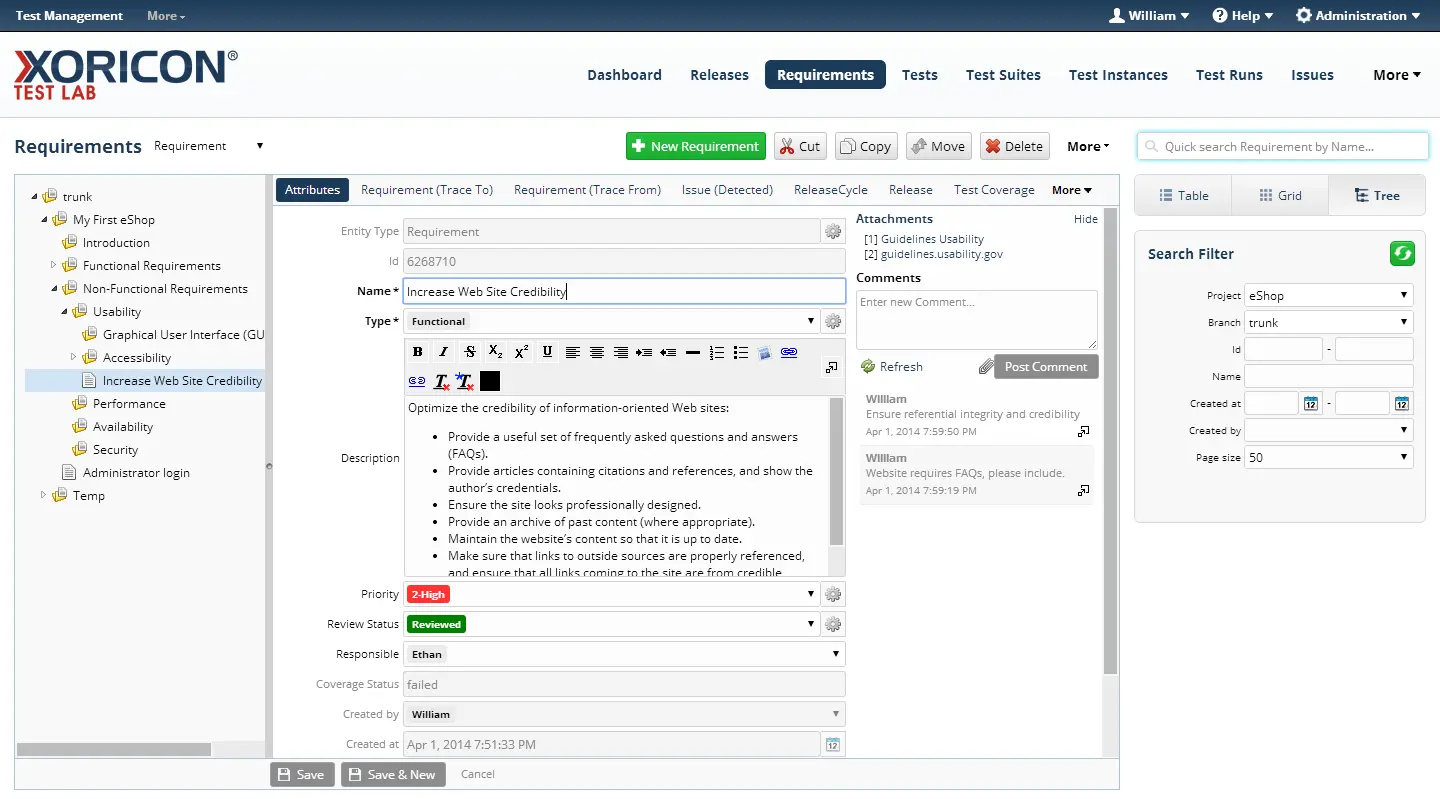
Requirements
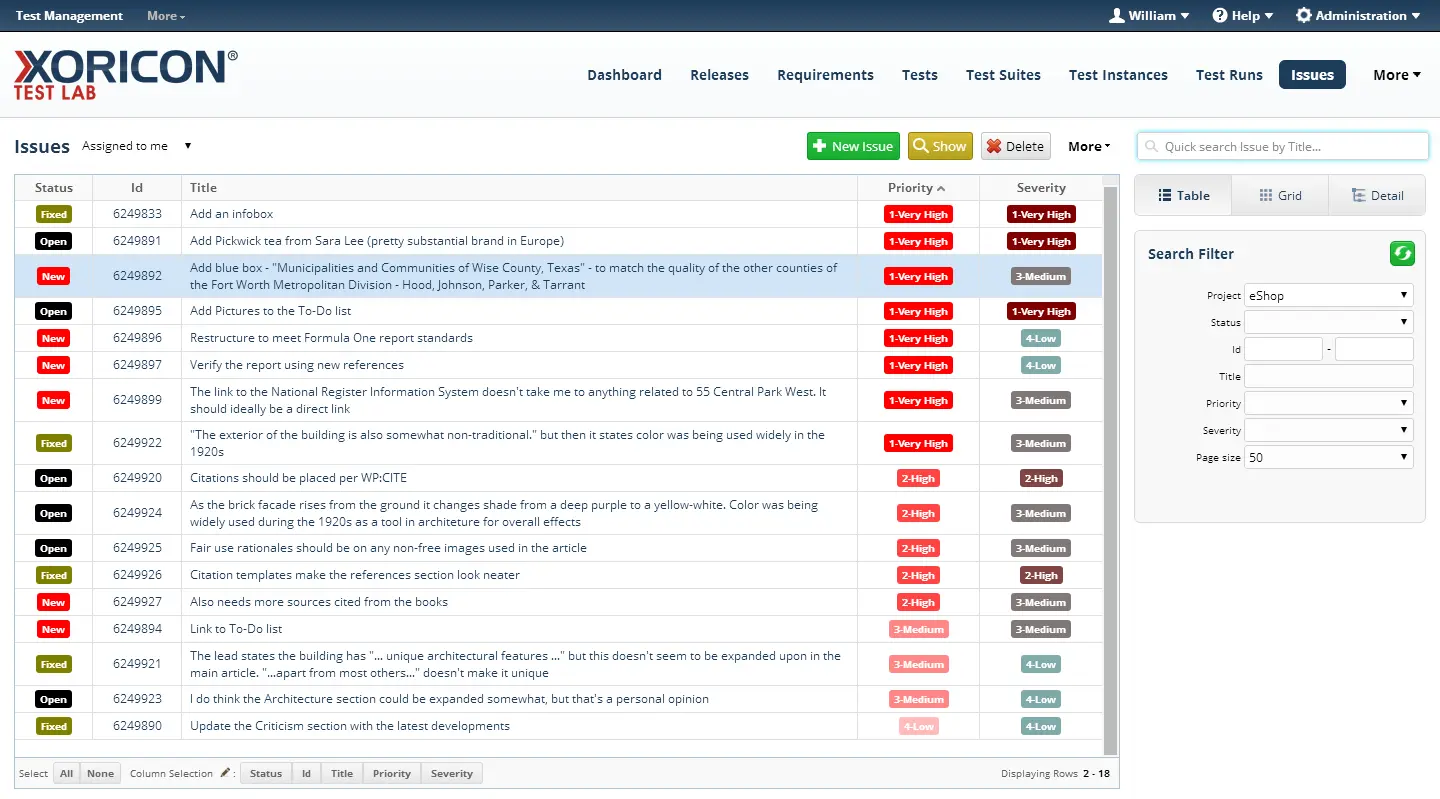
Issue tracking
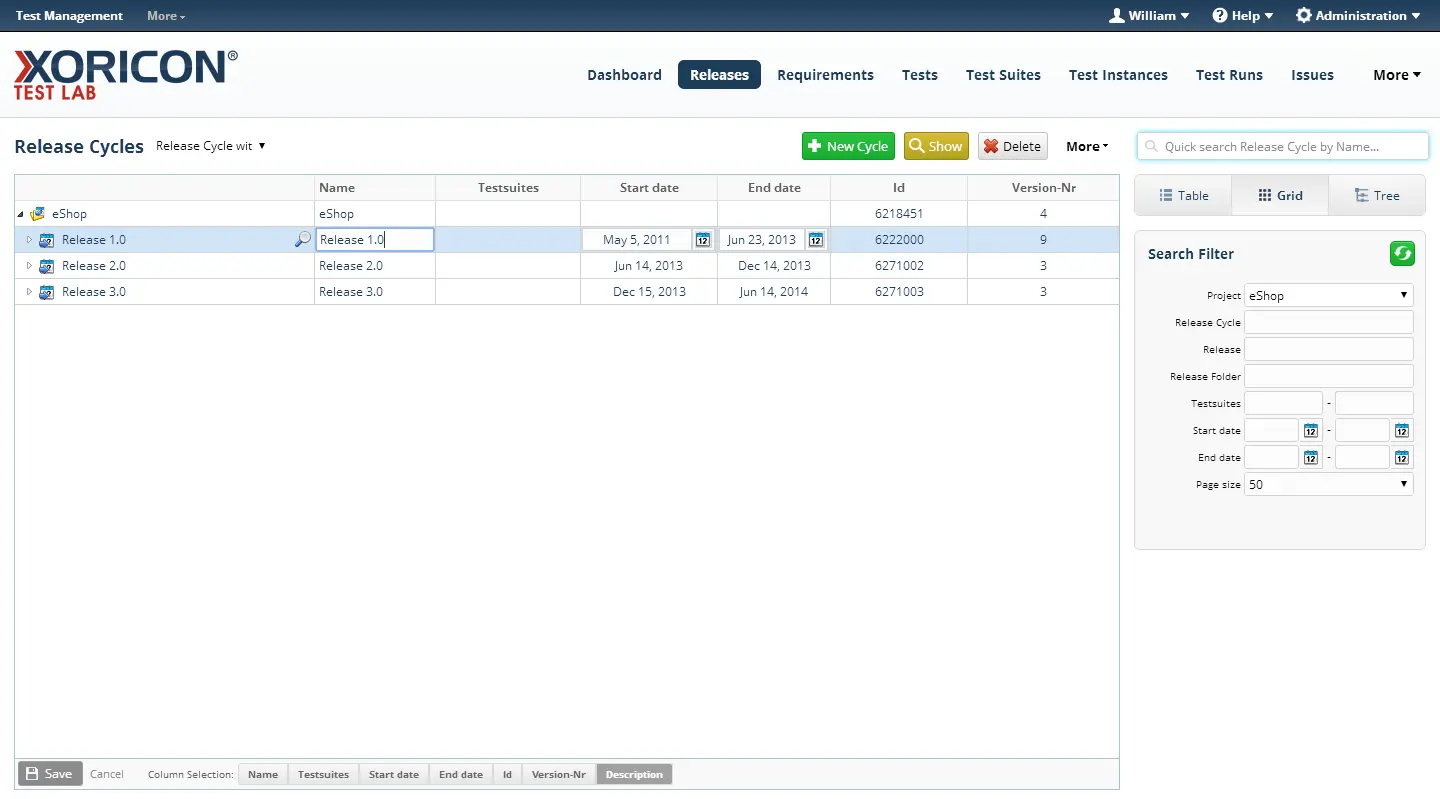
Release management
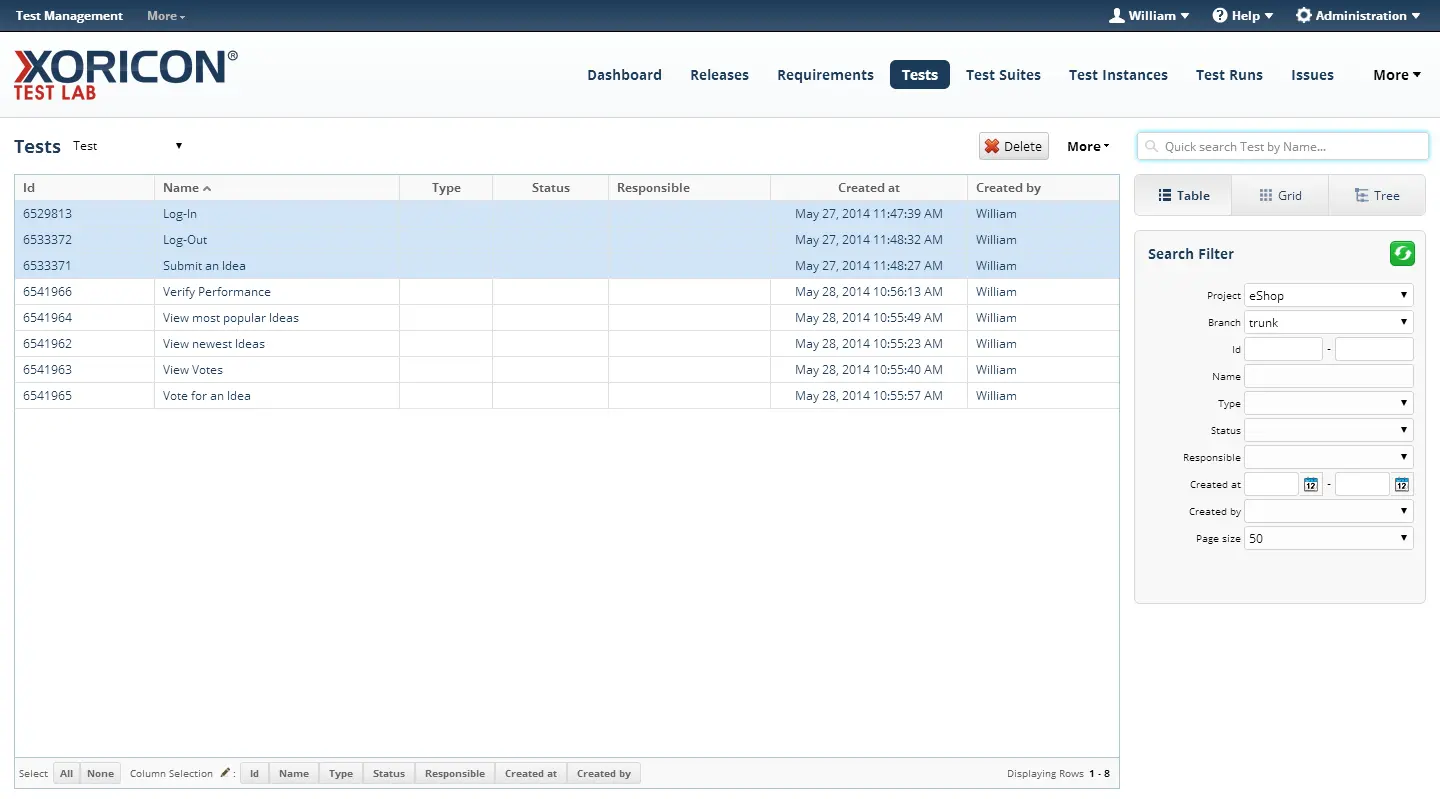
Comparisons
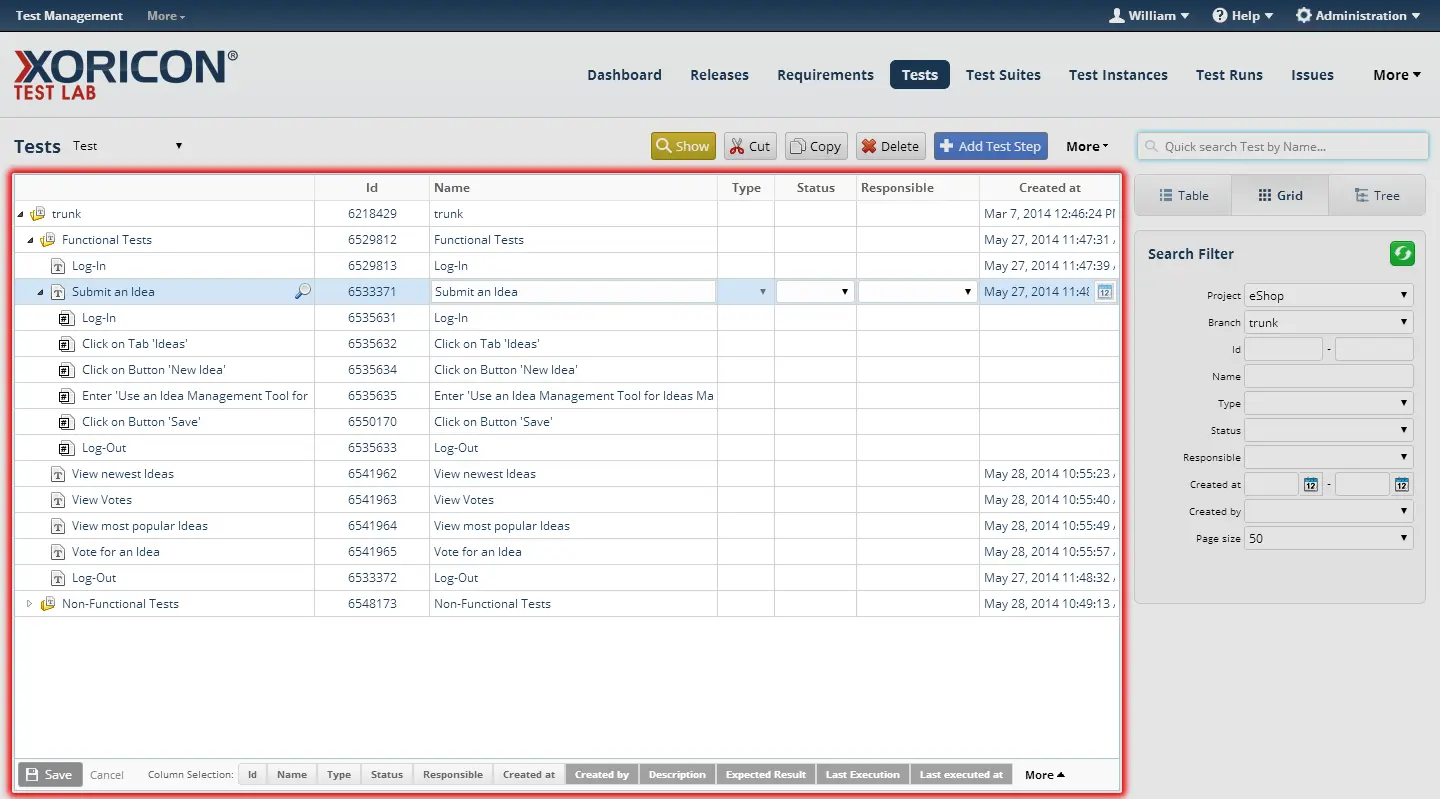
Grid views
Typical use cases
Scenarios where the product can apply its strengths.
Test management for multiple releases and product variants
Traceability between requirements and test coverage
Quality control through branches and baselines
Workflow-driven handling of defects and changes
Role-based collaboration with internal and external stakeholders
Frequently asked questions
Compact answers that explain the product and suitable use cases.
What is XORICON TestQA?
TestQA connects reusable test cases, requirements, releases, issues, branches, and baselines in a structured ALM tool for traceable quality management.
Who is XORICON TestQA for?
XORICON TestQA is primarily built for QA and test management teams, Product teams with release and variant management, Organizations with traceable quality processes.
Which capabilities does XORICON TestQA cover?
XORICON TestQA covers capabilities including Reuse test cases, Use branches and baselines, Trace quality, Report QA status, Use flexible views and filters, Control workflows and permissions.
What are typical use cases for XORICON TestQA?
Typical use cases are Test management for multiple releases and product variants, Traceability between requirements and test coverage, Quality control through branches and baselines, Workflow-driven handling of defects and changes, Role-based collaboration with internal and external stakeholders.
How does XORICON TestQA differ from XORICON TestLab?
XORICON TestQA focuses on application lifecycle management with branches, baselines, and release comparison features. XORICON TestLab focuses more strongly on test execution, requirement engineering, and personalized QA dashboards.
Related products
More applications from the same product family.
XORICON TestLab
TestLab supports planning, structuring, executing, and evaluating tests with requirements, test suites, issues, release context, reports, and dashboards.
XORICON Requirements
Requirements helps teams manage business, product, and technical requirements hierarchically, track changes, and connect them to releases, issues, or other objects.
XORICON IssueTracker
IssueTracker helps teams capture, prioritize, filter, and track defects, tasks, service requests, change requests, and ideas.
Could this product fit your initiative?
Let us discuss the use case, existing processes, and the right next step.